Raymond Loewy Gallery & The Roanoke Passenger Station
The Historical Society of Western Virginia oversees the Raymond Loewy Gallery, the only permanent United States gallery dedicated to the famous French-American industrial designer.
A Railroad Builds a City
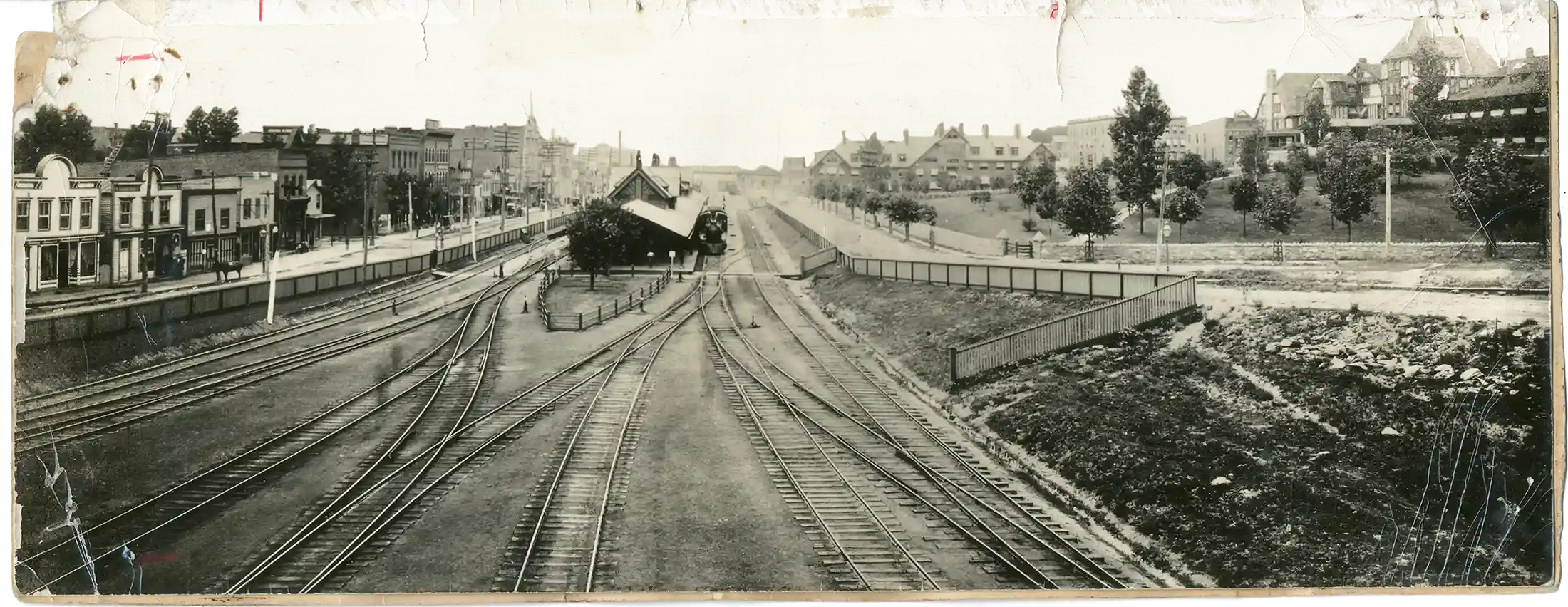
Before the arrival of the railroad, Big Lick was a small farming town in Virginia's Roanoke Valley. That changed in 1882 when Norfolk & Western Railway selected the community as the location for its headquarters. The decision transformed Big Lick into the booming city of Roanoke and established the railroad as the driving force behind the region's growth and identity.
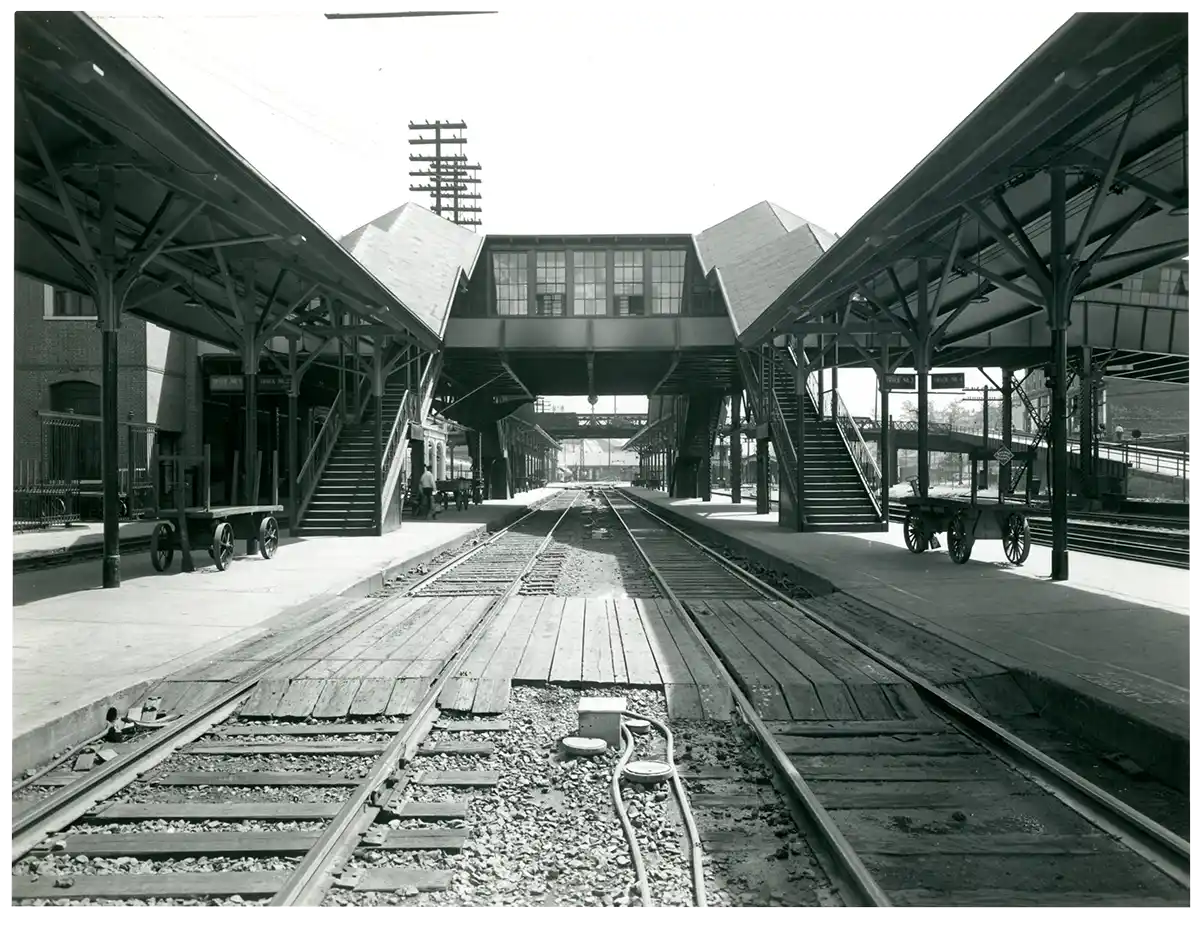
The first passenger station was constructed in 1882 at Jefferson Street in the middle of the railroad tracks. While suitable for the small community it initially served, the station quickly became inadequate as Roanoke's population, rail traffic, and commercial activity expanded. To better serve the growing city, Norfolk & Western chose to construct a larger and more modern station at the base of the hill overlooking the tracks.
A monument to the Railroad Era
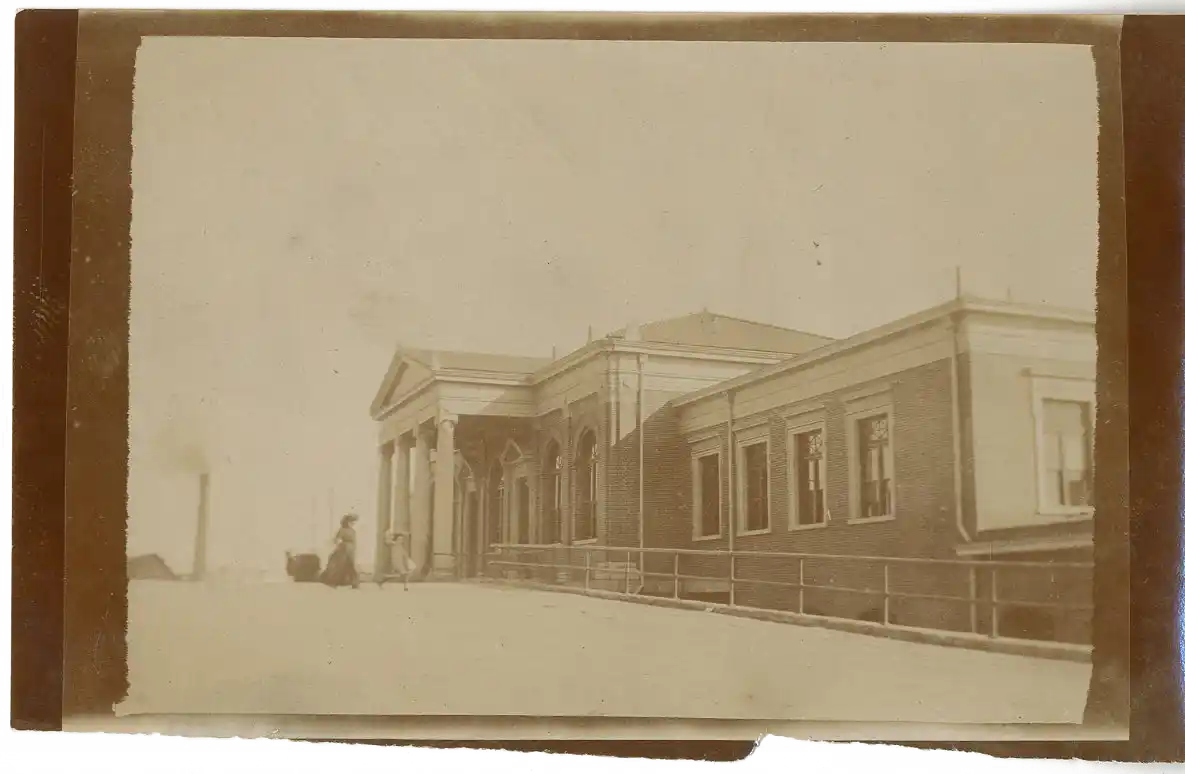
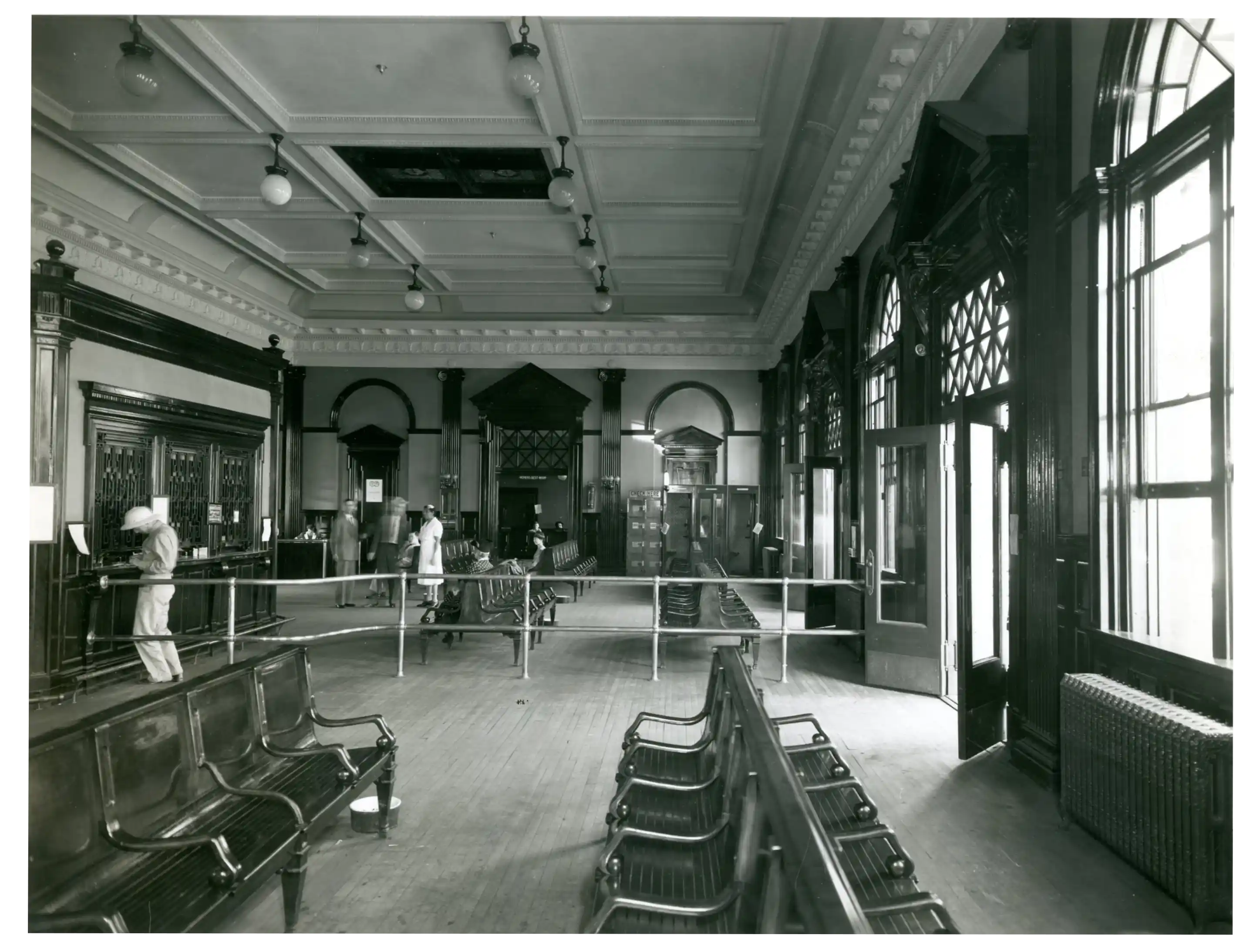
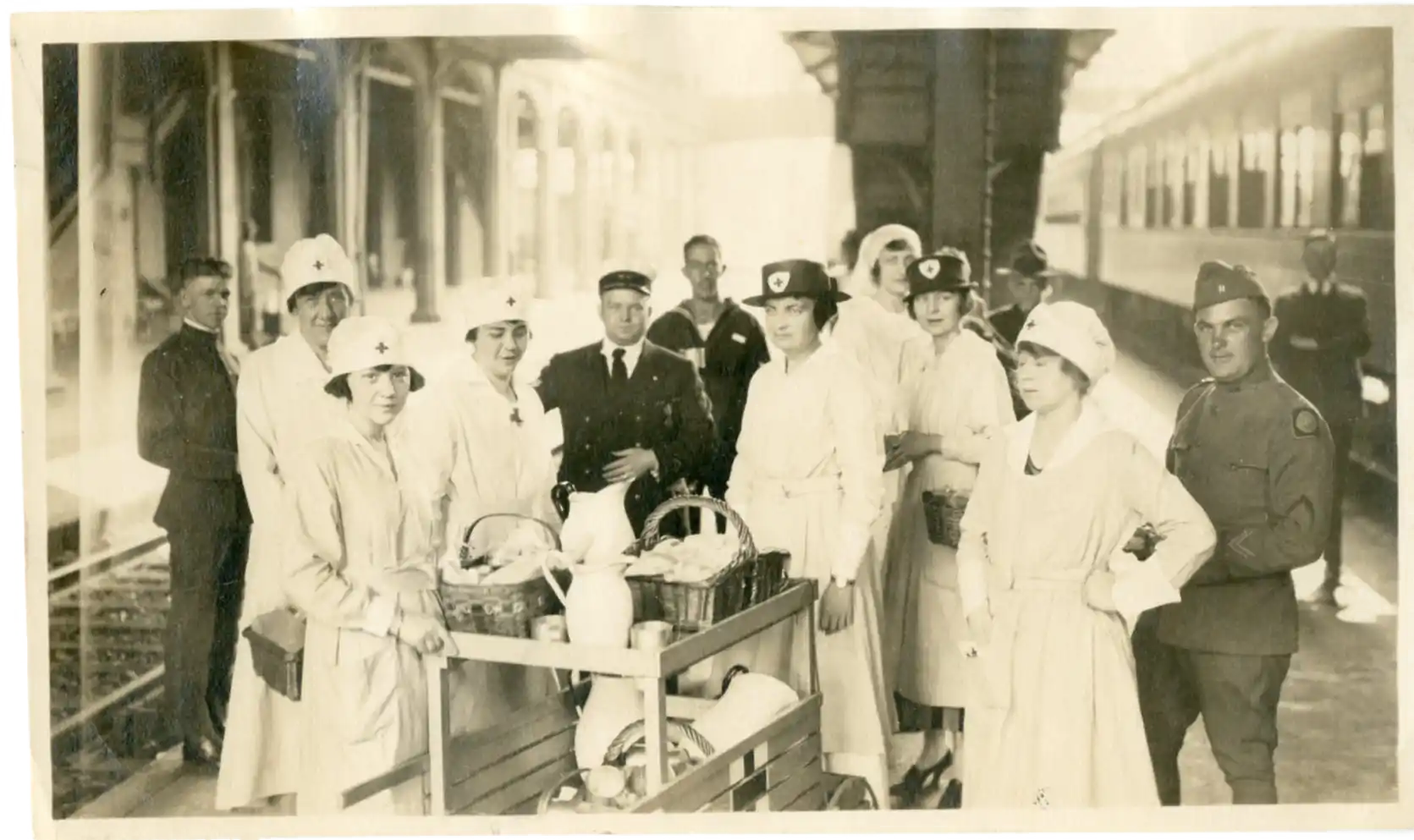
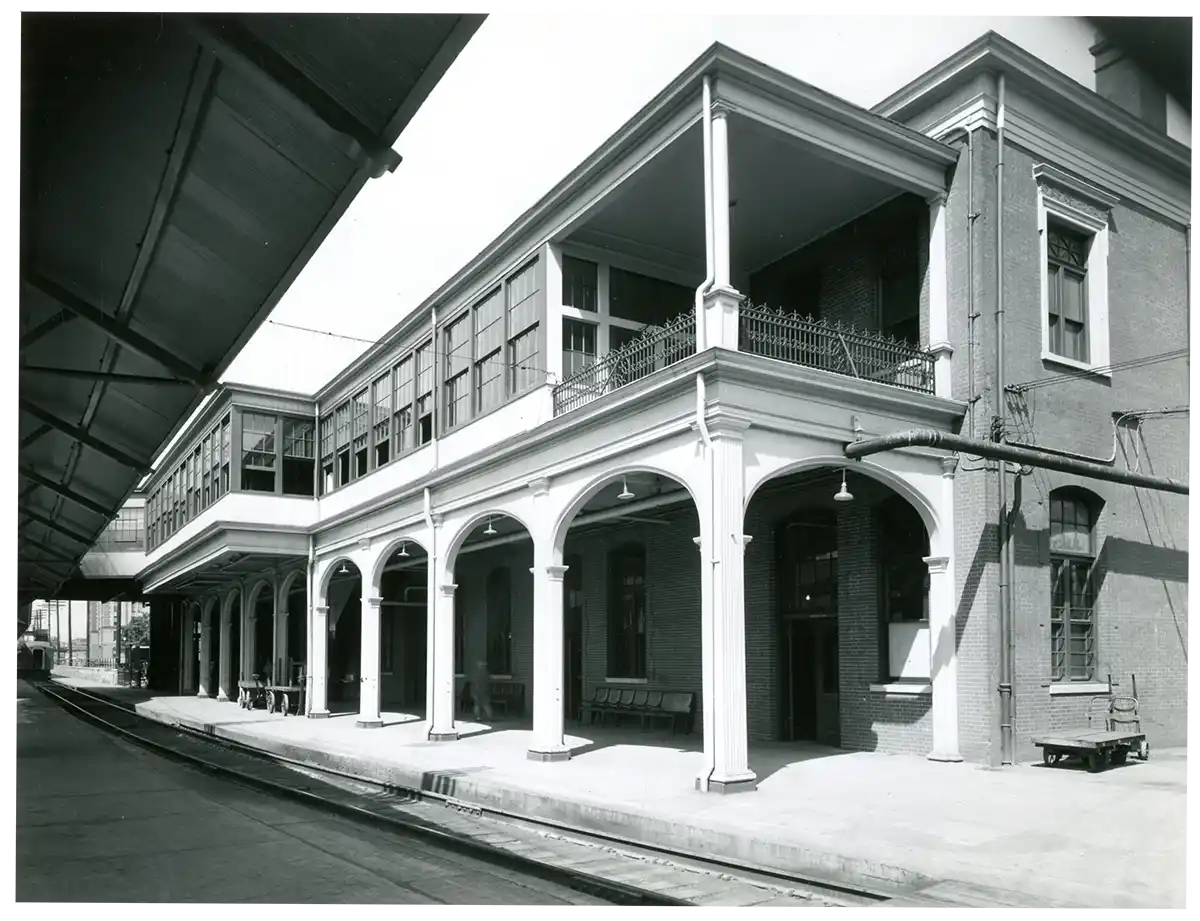
Construction on the new station began in 1904, and it opened in 1905. Designed in the Classical Revival style, the building projected permanence, confidence, and civic pride, and reflected Norfolk & Western's status as one of the nation's leading railroads. The new station welcomed travelers with the architectural taste of the time and the latest comforts and conveniences available at the beginning of the Twentieth Century.
Reinventing the Station
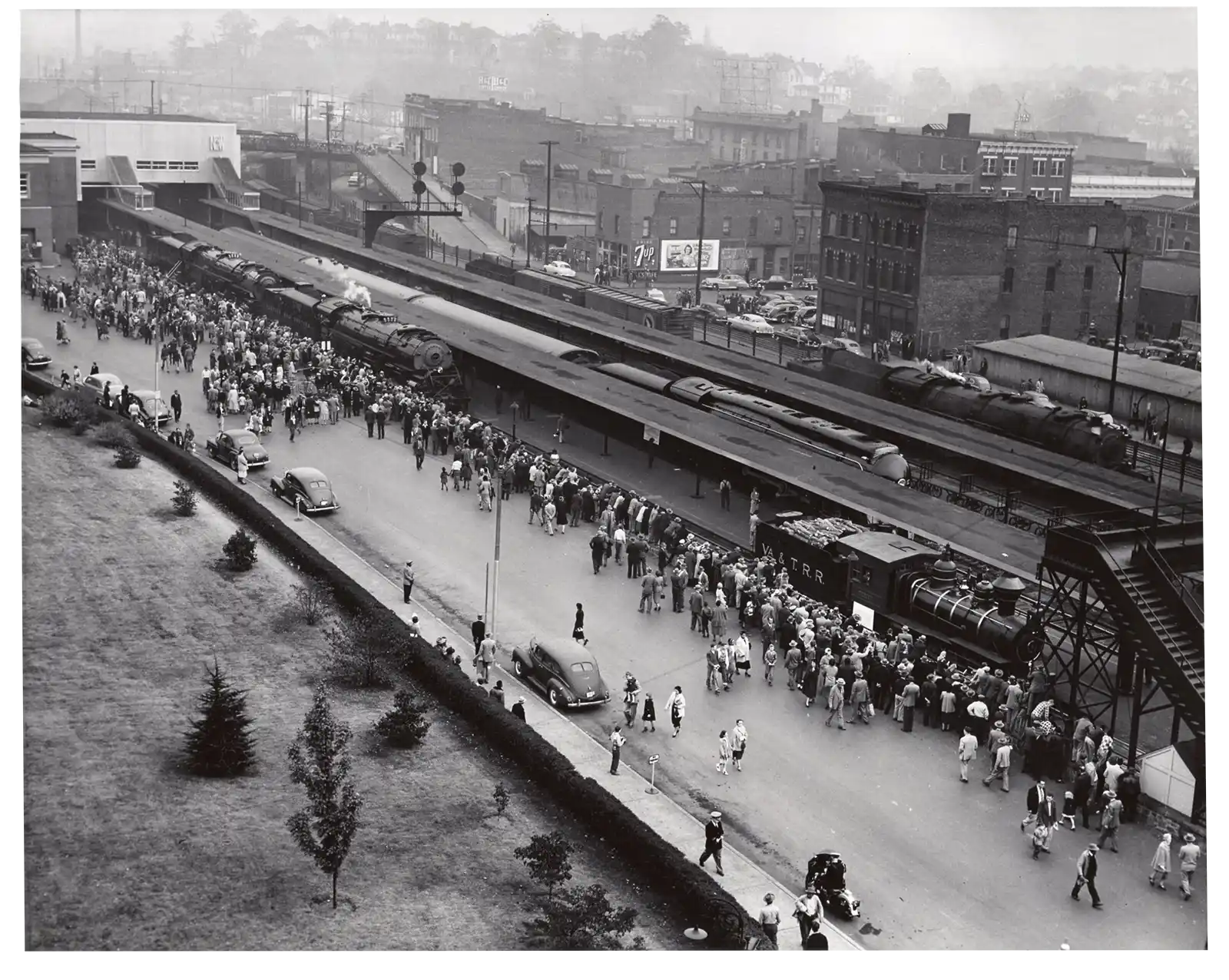
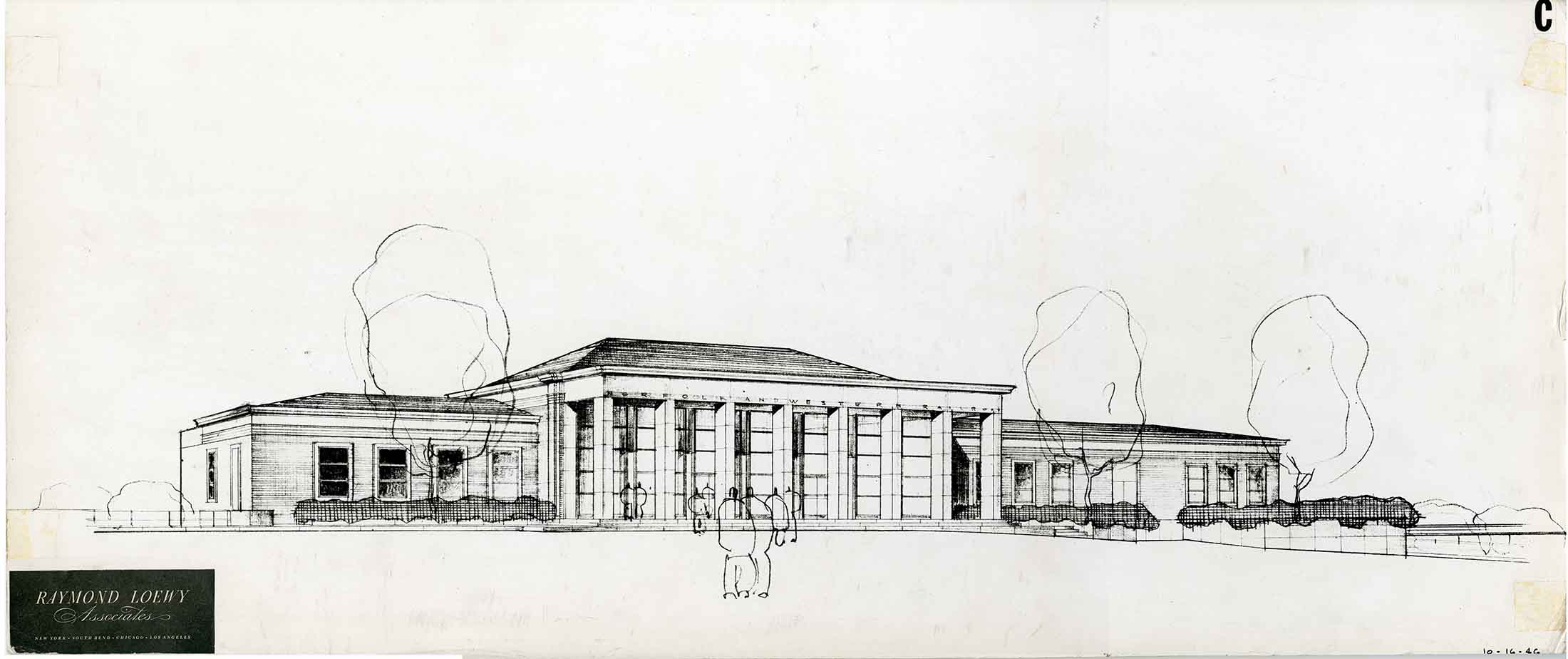
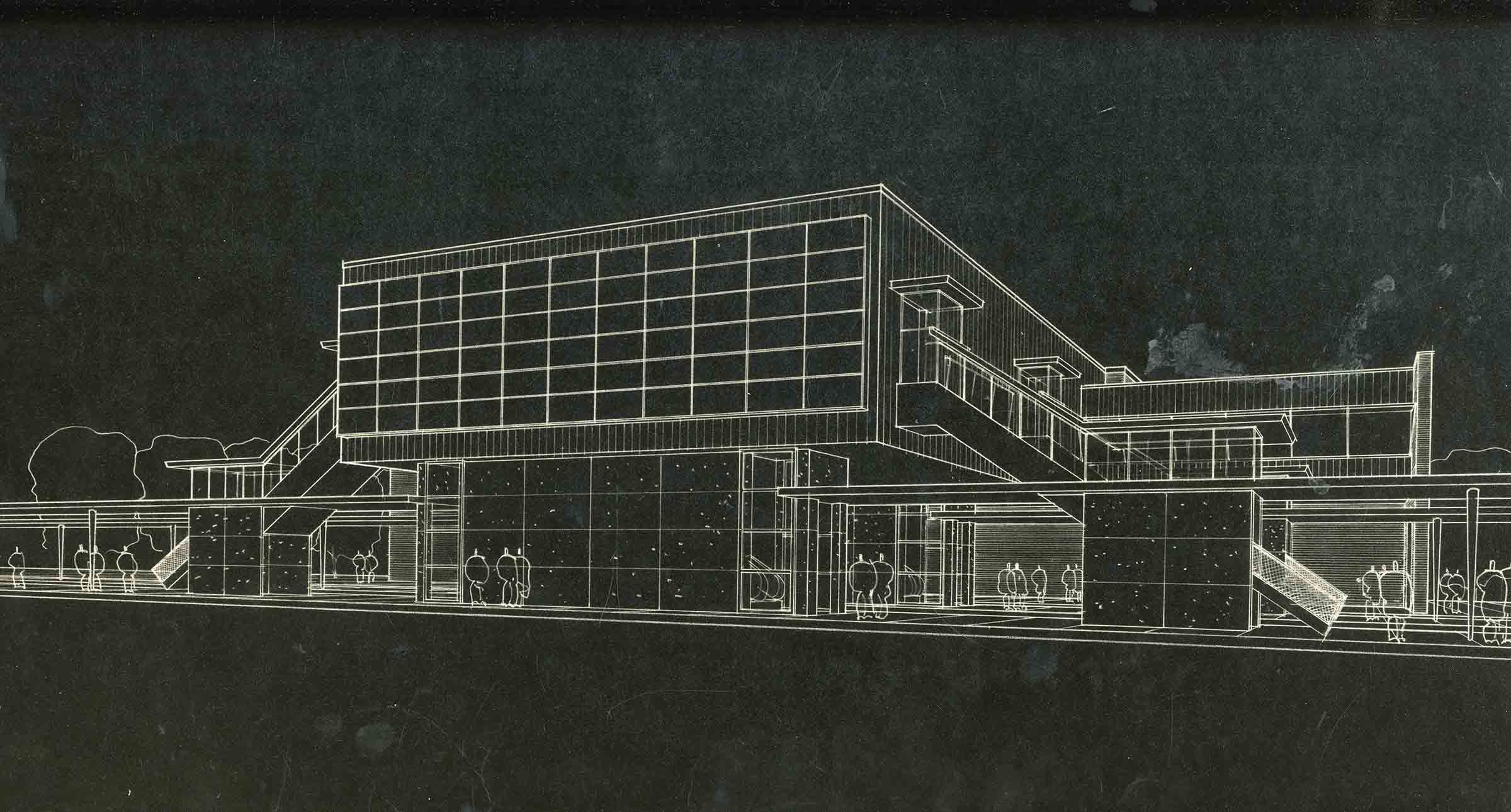
By the mid-twentieth century, architectural tastes and passenger expectations had changed dramatically. Rather than constructing a new station, Norfolk & Western chose to reinvent the one it already had.
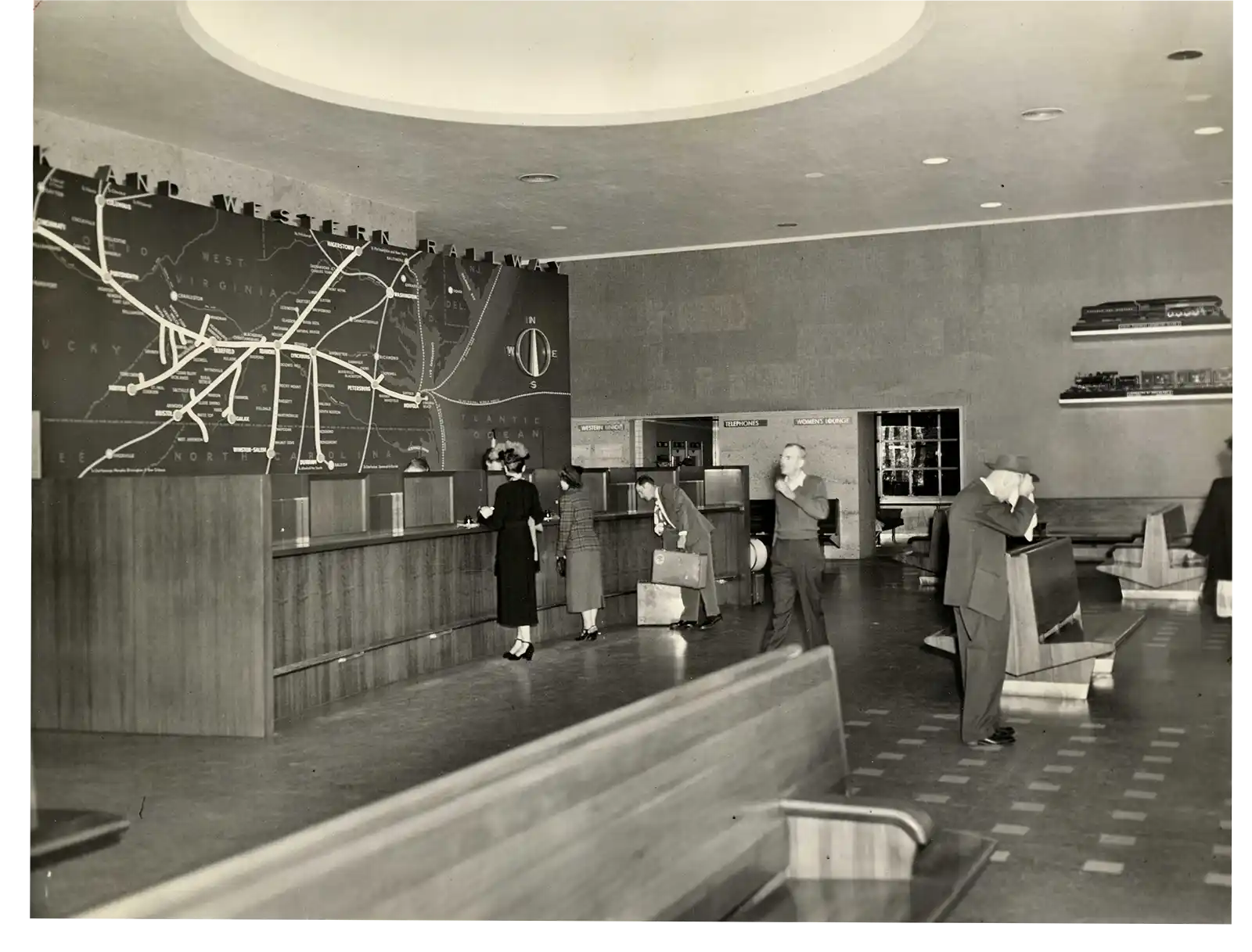
The railroad commissioned the firm of internationally renowned industrial designer Raymond Loewy to modernize the building. While retaining the 1905 shell, the renovation removed the Classical Revival ornament and dark interior in favor of open spaces, clean lines, and modern conveniences inspired by the International Style of Le Corbusier and Mies van der Rohe. Air conditioning, escalators, and a dramatic new interior transformed the station into a thoroughly modern transportation terminal.
Raymond Loewy
In 1949, Loewy redesigned the Norfolk & Western Passenger Station that houses the O. Winston Link and History Museum of Western Virginia as well as Visit Virginia’s Blue Ridge. In this gallery, you will find sketches for the station redesign, as well as images that depict Loewy’s work with the Pennsylvania Railroad, Greyhound, Shell, Studebaker, Coca-Cola, Air Force One, and even NASA!
Loewy was born in Paris in 1893. He served in the French army during WWI. In 1919, he traveled to the United States, arriving in New York. One of his earliest jobs in the States was doing fashion illustrations for department stores and magazines. This quickly transitioned into higher-level design work that took him to the Pennsylvania Railroad. Soon Loewy had his own design firm, Raymond Loewy International, with offices in New York, Paris, London and others. He was sought after by many large corporations for his sleek design style and efficient work. Loewy is often referred to as “the father of industrial design” and was featured on the cover of TIME magazine in 1949 (the only industrial designer to receive this recognition). Loewy retired in 1980 at the age of 87. He died in 1986 and is buried in Rochefort-en-Yvelines, France.
A New Chapter
Passenger rail service ended in 1971, bringing an end to the station's original purpose. After serving briefly as railroad office space and standing vacant for a number of years, the building entered a new phase in 2001.
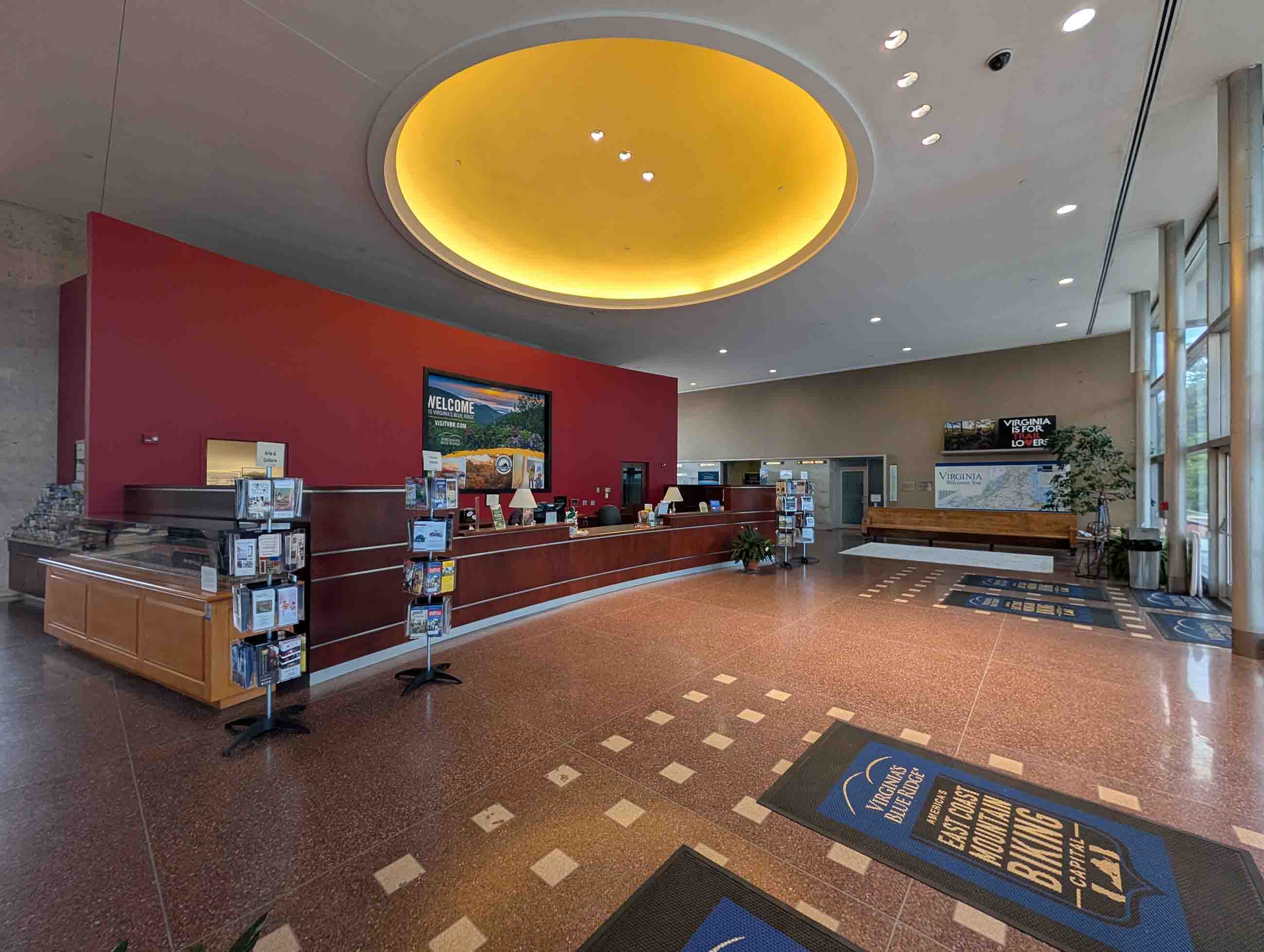
A comprehensive rehabilitation transformed the former passenger station into the home of the O. Winston Link Museum and the Visit Virginia's Blue Ridge Visitor Information Center. Rather than returning the building to its 1905 appearance, the project embraced the building's layered history by preserving the historic structure, restoring significant Raymond Loewy-era details, and adapting the station for a new public purpose.
In 2017, the Roanoke History Museum relocated to the station, bringing together two museums dedicated to preserving and sharing the history of Roanoke and western Virginia.
Tell us more
Let us know what brings you here